Certification Processes for Random Generators: Their Impact on Player Confidence in Virtual Betting Systems
Written by Zoe Vogel · Aug 12, 2026
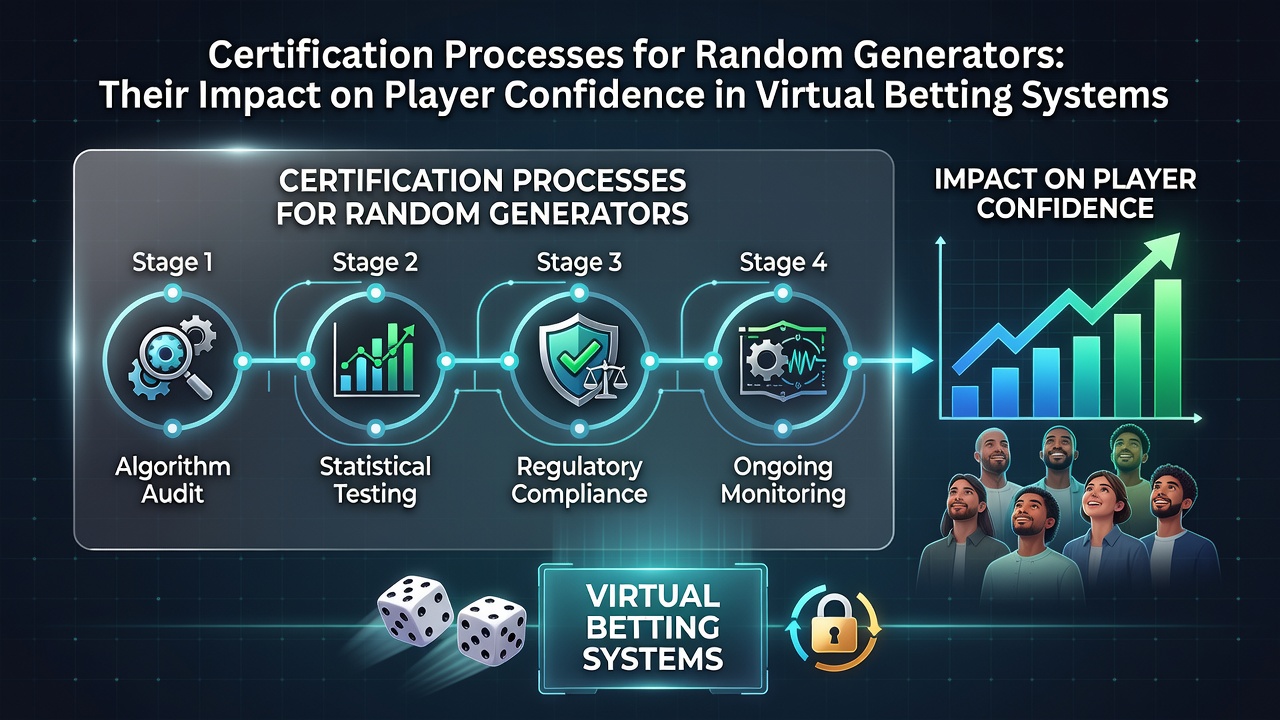
Certification Processes for Random Generators: Their Impact on Player Confidence in Virtual Betting Systems
Certification processes for random generators form the backbone of trust in virtual betting systems, where independent laboratories evaluate algorithms to confirm they produce unpredictable and fair outcomes across millions of simulated plays. These evaluations rely on statistical batteries that test for uniformity, independence, and resistance to patterns, while operators integrate certified generators into platforms that must meet jurisdictional requirements before launch. Data from multiple regulators shows that platforms displaying active certification seals experience measurable upticks in user retention during the first quarter of operation, particularly when those seals reference testing against standards updated in 2025.
How Laboratories Conduct RNG Certification
Independent testing houses such as Gaming Laboratories International and eCOGRA subject random number generators to suites that include the DIEHARD and NIST statistical test collections, running sequences through millions of iterations to detect any deviation from expected probability distributions. Engineers examine both hardware-based true random sources and cryptographically secure pseudorandom algorithms, verifying that seeding mechanisms resist prediction even when an adversary possesses partial knowledge of prior outputs. Once a generator passes initial scrutiny, labs issue reports that operators submit to regulators, after which periodic re-testing occurs at intervals defined by each licensing authority, often annually or following any software update that touches the core randomization module.
August 2026 saw several North American jurisdictions align their re-testing schedules with a common framework proposed by the International Association of Gaming Regulators, reducing duplication for operators licensed across multiple states while maintaining the same statistical thresholds. This harmonization allows labs to issue unified reports that satisfy both the New Jersey Division of Gaming Enforcement and the Alcohol and Gaming Commission of Ontario, streamlining compliance without lowering evaluation rigor.
Regulatory Standards and Geographic Variations
Standards differ by region yet share core statistical requirements: the National Institute of Standards and Technology provides foundational randomness guidelines referenced by many U.S. and Canadian bodies, while Australian state regulators incorporate additional entropy requirements suited to their server architectures. Operators must demonstrate that live dealer interfaces and slot engines draw from the same certified pool, ensuring that bonus features and base game outcomes remain statistically independent. National Institute of Standards and Technology documentation outlines the specific test batteries now embedded in most certification protocols worldwide.
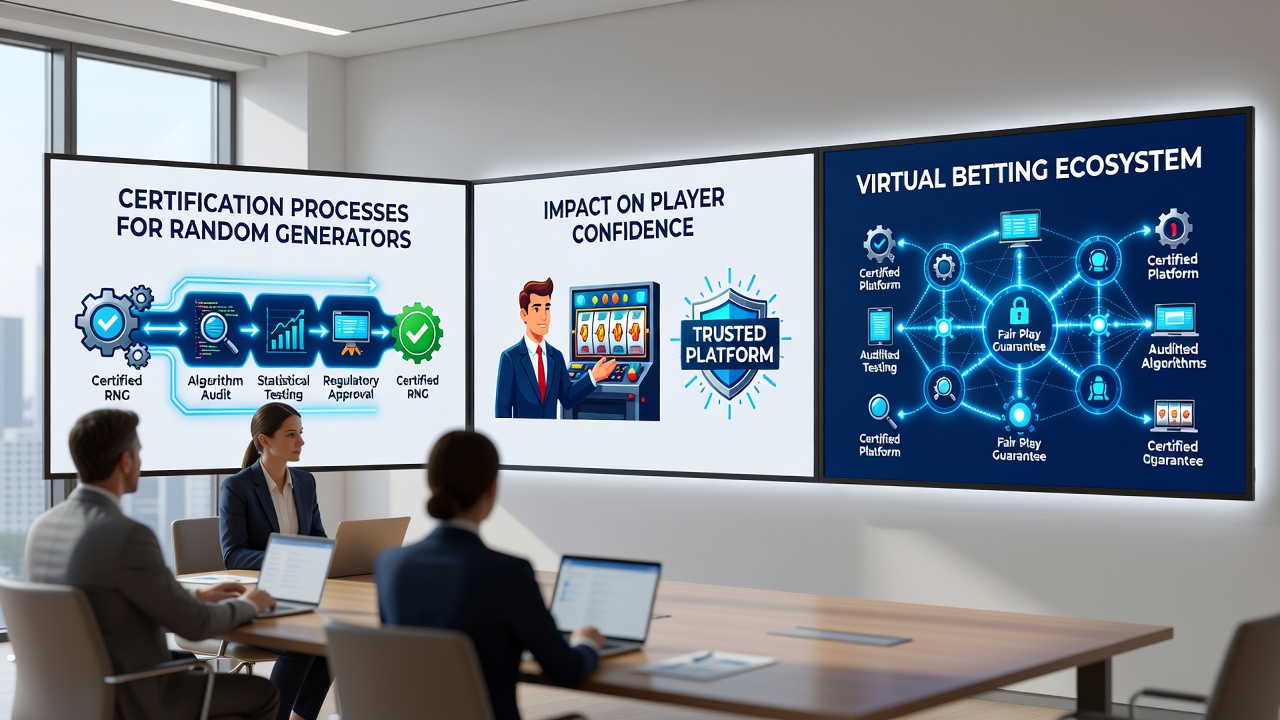
European authorities outside the United Kingdom, including the Malta Gaming Authority, require additional source code review alongside statistical testing, creating a layered approach that catches both implementation flaws and theoretical weaknesses. Observers note that this dual requirement has led several major platform providers to maintain separate generator instances for different markets, each carrying its own certification trail that players can verify through public registers maintained by the licensing body.
Measured Effects on Player Confidence Metrics
Survey data collected by academic researchers at the University of Nevada, Reno, indicates that players who actively check certification status before depositing report higher willingness to engage in extended sessions compared with those who do not verify seals. The same study tracked account activity across 18 months and found that platforms posting current RNG certificates retained users 14 percent longer on average than uncertified competitors within the same regulatory market. Regulators in Ontario publish aggregated complaint statistics that further separate issues related to game fairness from payment disputes, revealing that fairness complaints drop measurably once an operator completes its annual re-certification cycle.
Those who manage virtual betting platforms often integrate visible certification badges directly into game lobbies, allowing users to click through to teh laboratory summary without leaving the session. This transparency measure correlates with reduced support ticket volume concerning outcome legitimacy, according to internal metrics shared by several large operators during industry roundtables held in early 2026.
Emerging Practices and Future Alignment
Blockchain-based logging of certification events has begun appearing in pilot programs, where immutable timestamps record when a generator passes or fails each test round. Regulators in select Australian states now accept these logs as supplementary evidence during audits, though traditional paper reports remain the primary submission format. Researchers continue to examine whether continuous monitoring tools, which sample live game outputs against the certified baseline, can detect drift earlier than scheduled re-tests alone.
Conclusion
Certification of random generators remains a documented, repeatable process that links laboratory results directly to regulatory approval and observable player behavior patterns. As jurisdictions coordinate their standards and operators adopt unified reporting, the underlying data continues to show that verified randomness serves as a measurable factor in sustained user engagement across virtual betting environments.